“How much does a solar kit cost?” It is almost always the first question — and the answer is usually the vaguest one you find online. You come across all sorts of figures: a €300 kit, another at €15,000. Enough to make you wonder whether people are really talking about the same product.
They are talking about the same product. But a small 500 W plug-and-play kit costs around €300 to €600, whereas a 9 kW installation with a battery can exceed €15,000. In between, there are different power levels, equipment choices and installation options that can make the figure vary considerably.
This guide sets out the real price ranges for a solar kit in 2026, power level by power level, with and without a battery. The aim is not to sell you a price. It is to tell you what budget to plan for before you even open a product datasheet, and why two kits listed at the same power output can cost twice as much as each other.
Your electricity bill has gone up again, and you are starting to take a closer look at solar power. Then you open the first comparison guides: kWp, inverter, single-phase, self-consumption rate, incentives that change every quarter. Enough to make you close the tab.
We are going to do the opposite here. No pile-up of jargon, but a decision-making method. By the end, you will know exactly what to look at before buying a solar kit: the power, whether or not to include a battery, the connection, and the incentives applicable in 2026. This is the same approach we use at Kitsolaire to advise our customers.
A self-consumption solar kit, in practical terms
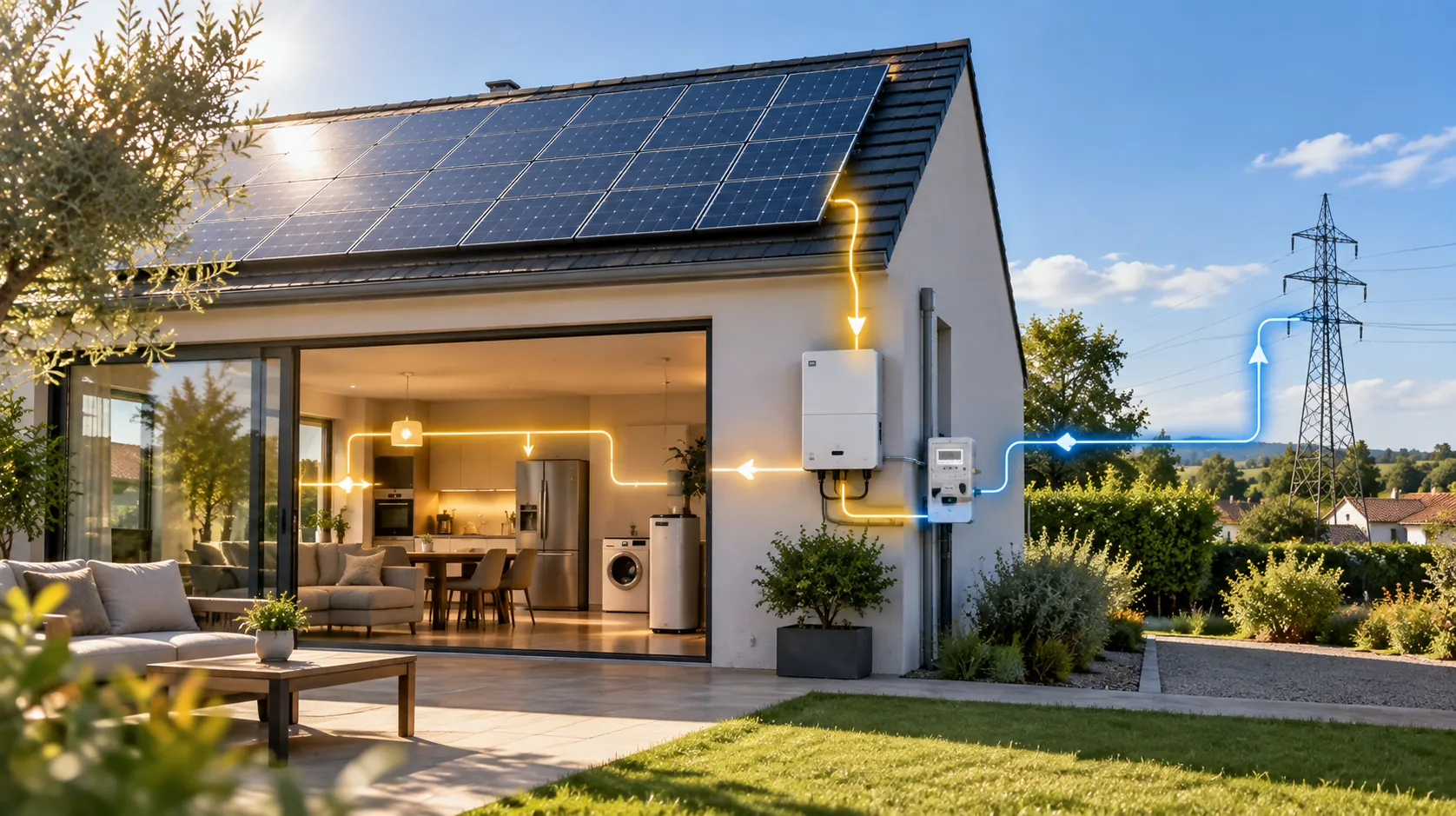
A solar kit includes all the equipment needed to produce your own electricity: the panels, the inverter (or microinverters), the racking system, the cabling, and increasingly often a battery.
We talk about a self-consumption solar kit when this electricity
Zendure SolarFlow Mix vs Anker SOLIX: Which Battery Should You Choose in 2026?
In 2026, the residential energy transition in France is reaching a new milestone. With regulated electricity prices continuing to rise to 0,1952 €/kWh under the Base option [1] and the gradual reduction in the surplus feed-in tariff to 4 c€/kWh [2], storing solar electricity rather than injecting it into the grid at a low rate has become the most profitable strategy. To meet this demand, two industry giants are competing in the smart energy storage market: Zendure with its brand-new SolarFlow Mix AC+ range and Anker SOLIX with its Solarbank
Anker Intelligence™ : How AI Optimises Your Solar Self-Consumption
Anker Intelligence™ does more than just store energy — it decides when to store it, when to consume it and when to buy electricity from the grid. Here is how this AI works continuously to reduce your electricity bill, even while you sleep.
Installing Solar Panels on a Balcony in France: What You Need to Know Before Getting Started
Suggested category: Renewable Energy — Tags: balcony solar panel, plug & play kit, self-consumption, co-ownership, Enedis, apartment
“Balcony solar panels” are becoming increasingly popular: easy to install, less expensive than a complete rooftop installation,
and perfect for reducing your electricity bill even in an apartment. But in France, can you really generate
electricity on your balcony? The answer is yes… provided you follow a few simple rules.
In this article, I explain what is permitted, any necessary procedures, and the right steps to take for a trouble-free installation.
Why Are Balcony Solar Systems So Popular?
When you live in an apartment, you often think that


 Français